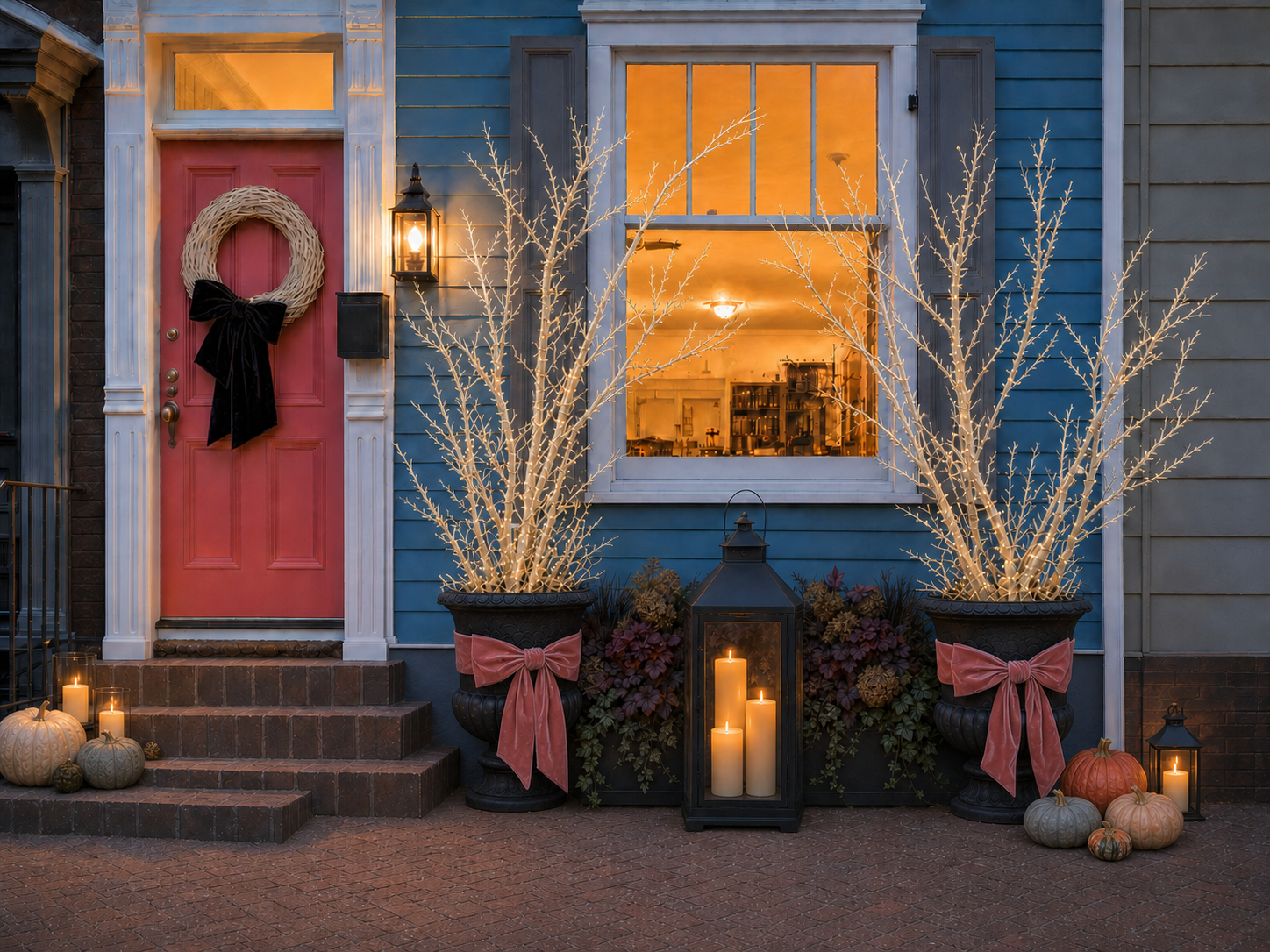
It is still hot enough to resent the walk from the car, but somewhere in your mind the porch light has already come on. The sky is that deep October blue that lasts for about eleven minutes. A black ribbon moves against the door. Branches reach above the railing. The pumpkins are not standing in a polite row. They have gathered at the steps as if something interesting is happening inside.
As soon as fall begins to feel possible, the porch begins assembling itself in your mind. Maybe it is all black and cream this year. Maybe it is faded orange, tobacco brown, and the exact oxblood red of an old library chair. Maybe one enormous urn of branches does almost everything.
A porch is an especially satisfying place to get carried away because the first view belongs to you. You see it when you pull into the driveway, when you come back from school pickup, and when you turn on the light before dinner. It can be a whole small season waiting at the front door.
The rest begins with atmosphere and works backward into shapes, quantities, light, and timing. Read it like a magazine feature, make a page of notes, or simply spend a while deciding whether the ribbon should be velvet.
Begin at 5:47 in the afternoon
The best way into it is not a product or a theme. It is a minute. Picture the house at 5:47 on an October afternoon, just as daylight begins to look blue and the warm porch light becomes visible. What do you want the first glance to feel like?
For this porch, the answer is a little dramatic and entirely composed: black against cream, long branches in motion, faded orange at the ground, and enough warm light to make the front door seem like the beginning of the evening. Nothing blinks. Nothing sings. The magic comes from scale, shadow, and repetition.
Choose three words for your own version before choosing anything that goes in it. They might be dark, golden, and overgrown. Or storybook, mossy, and candlelit. Or crisp, graphic, and almost entirely black. Those three words are more useful than a cart full of unrelated Halloween things.
Plan a minute, not a theme. The light, weather, and first glance will tell you what belongs.
Give the porch three shapes
Before anyone notices the material of the ribbon or the variety of a pumpkin, the porch reads as a silhouette. A strong porch has something high, something that holds the middle, and something that moves along the ground. Think of them as the exclamation point, the sentence, and the underline.
The high shape is usually the easiest place to be bold. Put branches in an urn and let them rise above the door hardware or railing. If the porch is narrow, use one urn and make it magnificent. If the door is centered with room on both sides, two quieter urns can create a formal frame. The branches should not be trimmed into obedience. Their irregularity is the interesting part.
The middle belongs to the door. A wreath can be wonderful, but it is not required. A broad ribbon tied around a dark wreath, a hanging bundle of branches, or a length of fabric that falls nearly to the doormat can hold the center. At the ground, gather pumpkins in several sizes so the eye moves naturally toward the entrance.
Look at the three shapes together before adding anything small. If the porch already feels like October from the driveway, every later detail is dessert.
Let the house choose the palette
The house is already the largest color on the porch. Let it make the first decision. Red brick has warmth and texture, so black and cream give it structure while aged brass and dark green feel as though they have always lived there. A white house can carry sharper contrast, tobacco brown, oxblood, and a quieter orange. Stone welcomes copper, parchment, charcoal, and deep plum.
Choose one dark color, one light color, and one autumn color. Then repeat them until the porch looks intentional from the sidewalk. Texture can do the rest. Velvet absorbs light. Dried leaves rustle. Matte black metal gives the pumpkins an edge. A brass lantern provides one small glint.
This is also where restraint becomes luxurious. Four excellent materials repeated with confidence feel richer than twenty novelty objects competing to be noticed. If you fall in love with something outside the palette, give it one deliberate place close to the door where it can be discovered.
Save a screenshot of the palette even if the porch never leaves your imagination this year. A good color story has a way of finding its occasion later.
Design the porch twice
A porch at noon and a porch at dusk are related, but they are not the same picture. In daylight, shape and texture carry the scene. You notice the rough branches, the soft ribbon, the chalky bloom on a blue-green pumpkin, and the way the group at the steps changes height.
After dusk, the dark pieces begin to disappear unless light gives them an outline. Turn on the porch fixtures before the sky is fully dark. Put battery candles in lanterns at two or three heights. If there is an outdoor outlet, a small warm spotlight aimed through the branches can throw their shadows across the wall.
Test the evening from inside the house as well. The view through a front window can be its own small pleasure: candlelight below, branches moving above, and the faint orange shapes of pumpkins between them.
Nothing about the lighting needs to flash or announce itself. The goal is simply to let the porch continue after the sun goes down.
Decide how far this version wants to go
There is no lesser version of a complete idea. One extraordinary ribbon can be the porch. So can a single urn of branches and three pumpkins. The pleasure comes from choosing a point of view and carrying it through, not from filling every available surface.
If you want one gesture, make it visible from the street: an extravagant door ribbon, a pair of tall branch urns, or a concentrated gathering of pumpkins at one side of the steps. If you want the whole porch, repeat that gesture at the door, on the ground, and in the light.
If you want to build a little world, let the idea continue just beyond the porch. A ribbon appears again on the mailbox. The same candlelight reaches the front window. A bowl inside the door holds matches, candy, or small cards for an October movie list.
Each version is finished when the idea repeats enough to feel intentional. You can stop there and admire it, or keep going because finding the next perfect detail is exactly how you wanted to spend the afternoon.
Source in the order the eye will notice
Begin with the pieces that establish scale. Urns, branch bundles, the wreath or ribbon, and the lanterns deserve the first decisions because they create the silhouette. Once those are settled, the number and size of pumpkins becomes much easier to see.
Branches may come from a florist, a garden center, a permitted pruning pile, or your own yard. Look for lines that fork and bend rather than a bundle of identical straight sticks. Ribbon needs enough body to hold its shape outdoors. If velvet is too delicate for the weather, use it beneath a covered entry or choose a wide outdoor ribbon with a soft, non-shiny finish.
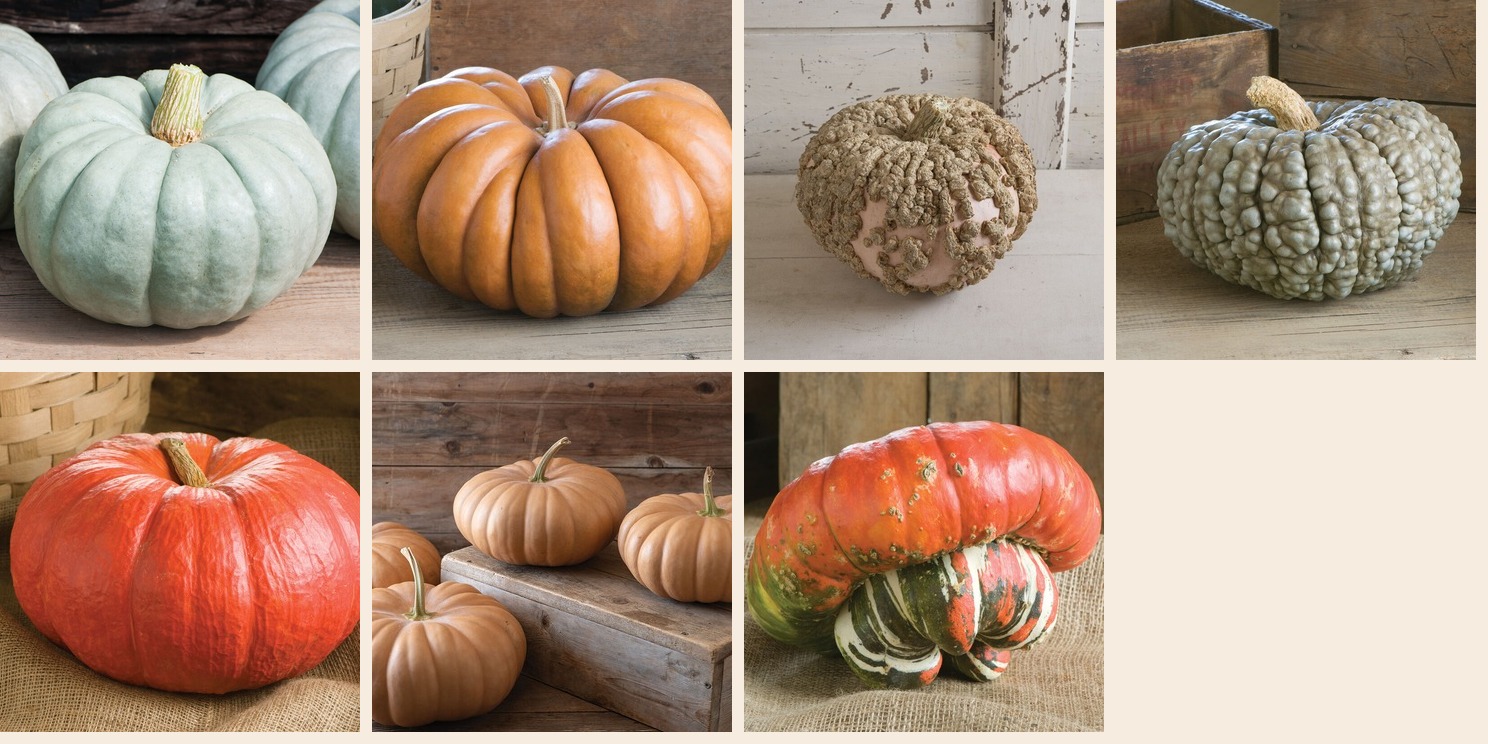
Pumpkins are best chosen in person if the shape matters to you. Start with one large anchor, add two medium companions, then tuck in smaller shapes to soften the edges. Blue-green, cream, and faded orange varieties make a group feel collected rather than matched.
The final category is the private delight: the tiny brass bell on the wreath, the black paper stars visible only under the porch ceiling, or the striped matchbox beside the candle inside. It comes last because it is not responsible for making the scene. It is there to reward anyone who looks closely.
Make a first-view map
Use a photograph instead of starting with a shopping list. Print the view from the driveway or draw over it on your phone. Circle the place where the eye should land first. Mark the high shape, the middle, and the low trail. Add a small star anywhere light will appear after dusk.
Then write the palette beside the picture and list the three details you would miss most if they vanished. Those are the pieces worth protecting. Everything else can remain a possibility in the margin.
The map is useful even when the porch is still purely imaginary. It holds the exact version you loved before fifty other ideas arrived. Next time the air begins to change, it will still know the color of the ribbon.
The whole plan
Choose the October minute first. Then give the porch three shapes, a short palette, a daylight texture, a dusk glow, and one detail that is there simply because finding it delighted you.
Paid links are marked where they appear. As an Amazon Associate I earn from qualifying purchases.
Save the idea