
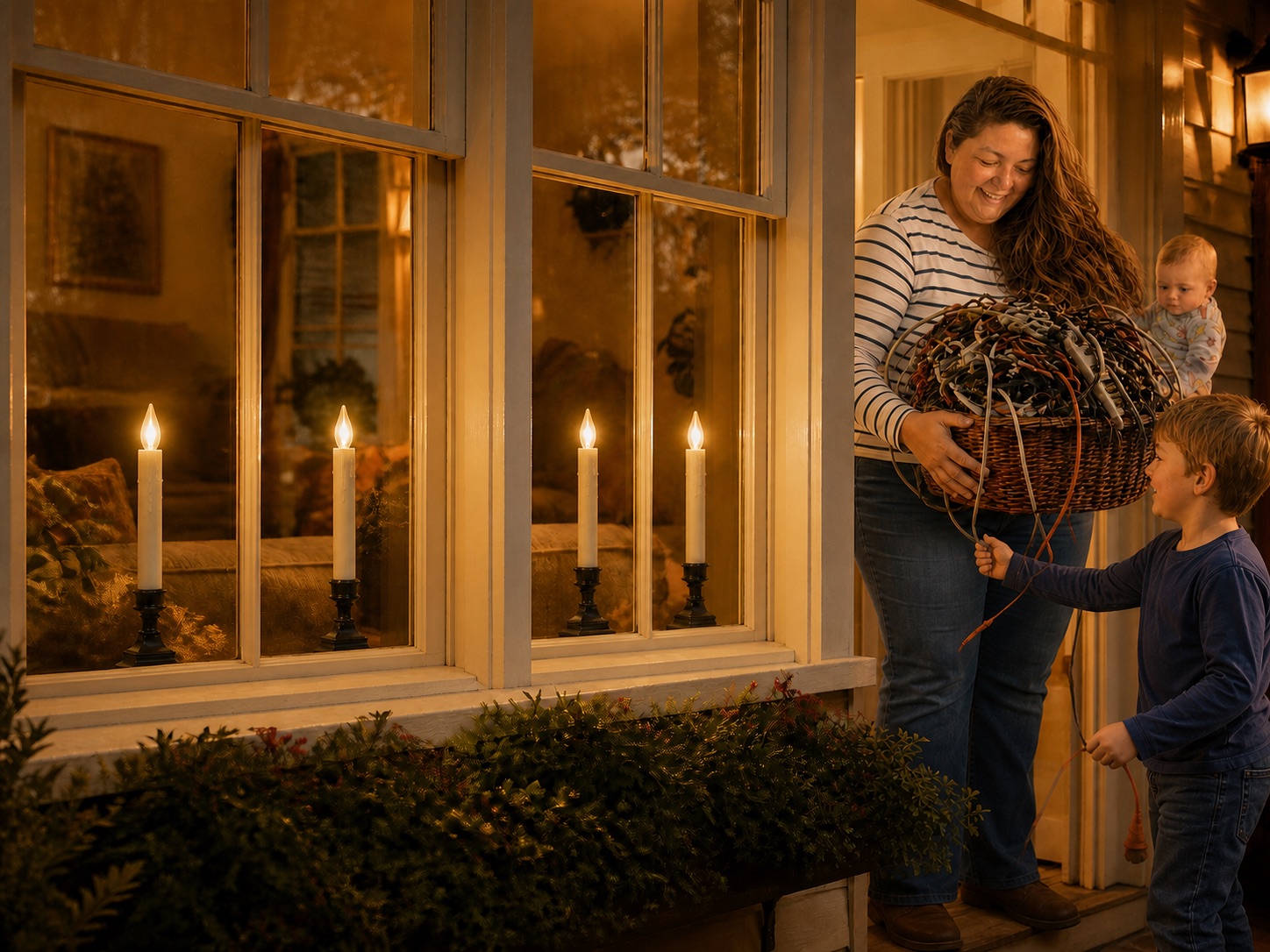
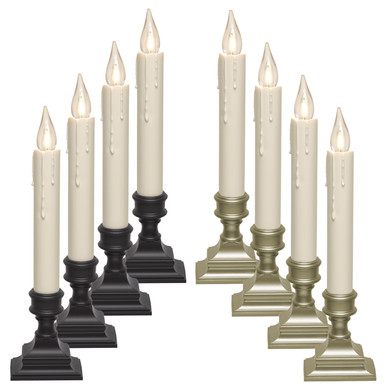
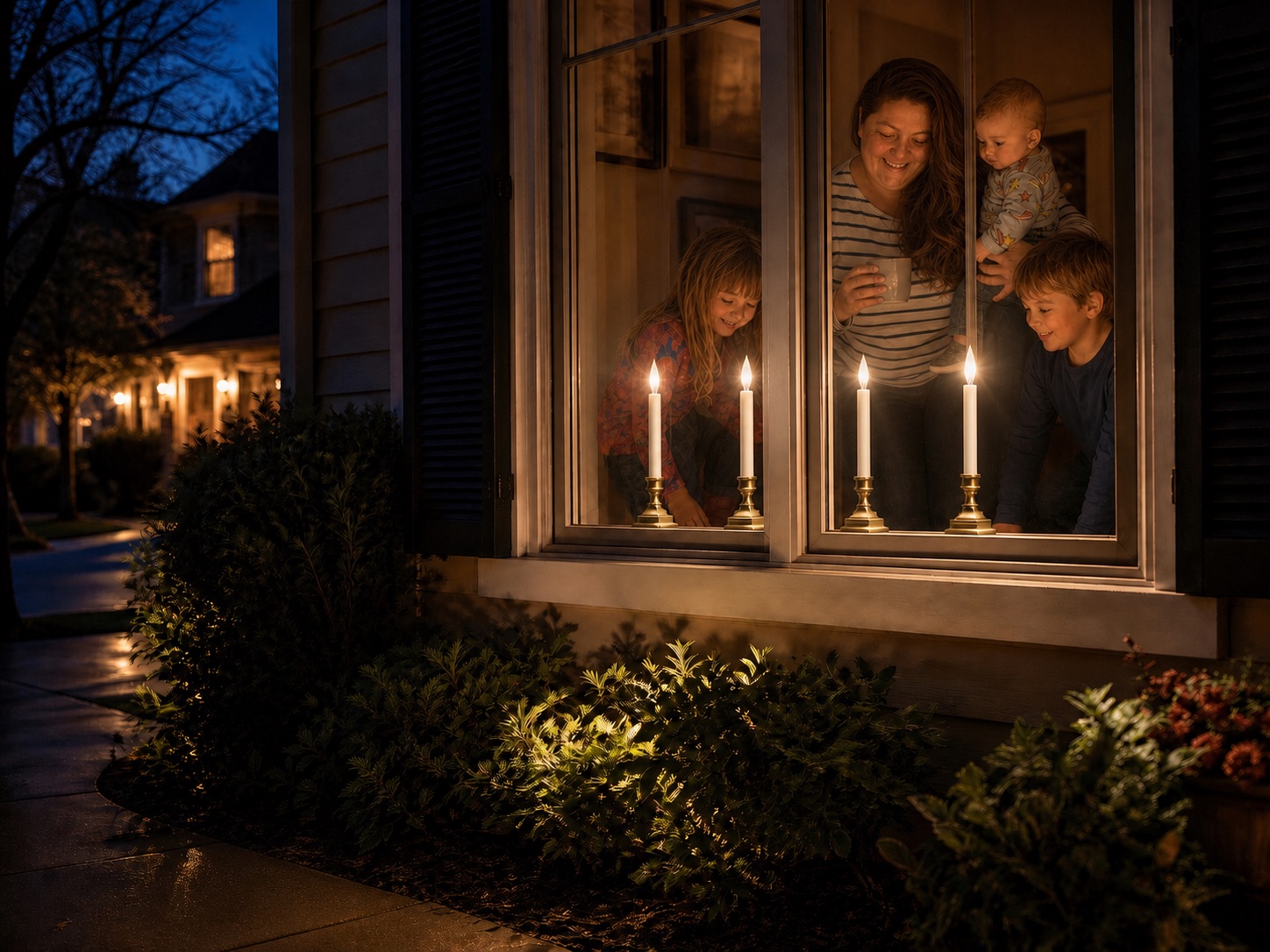
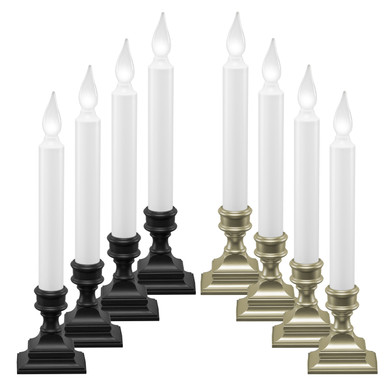
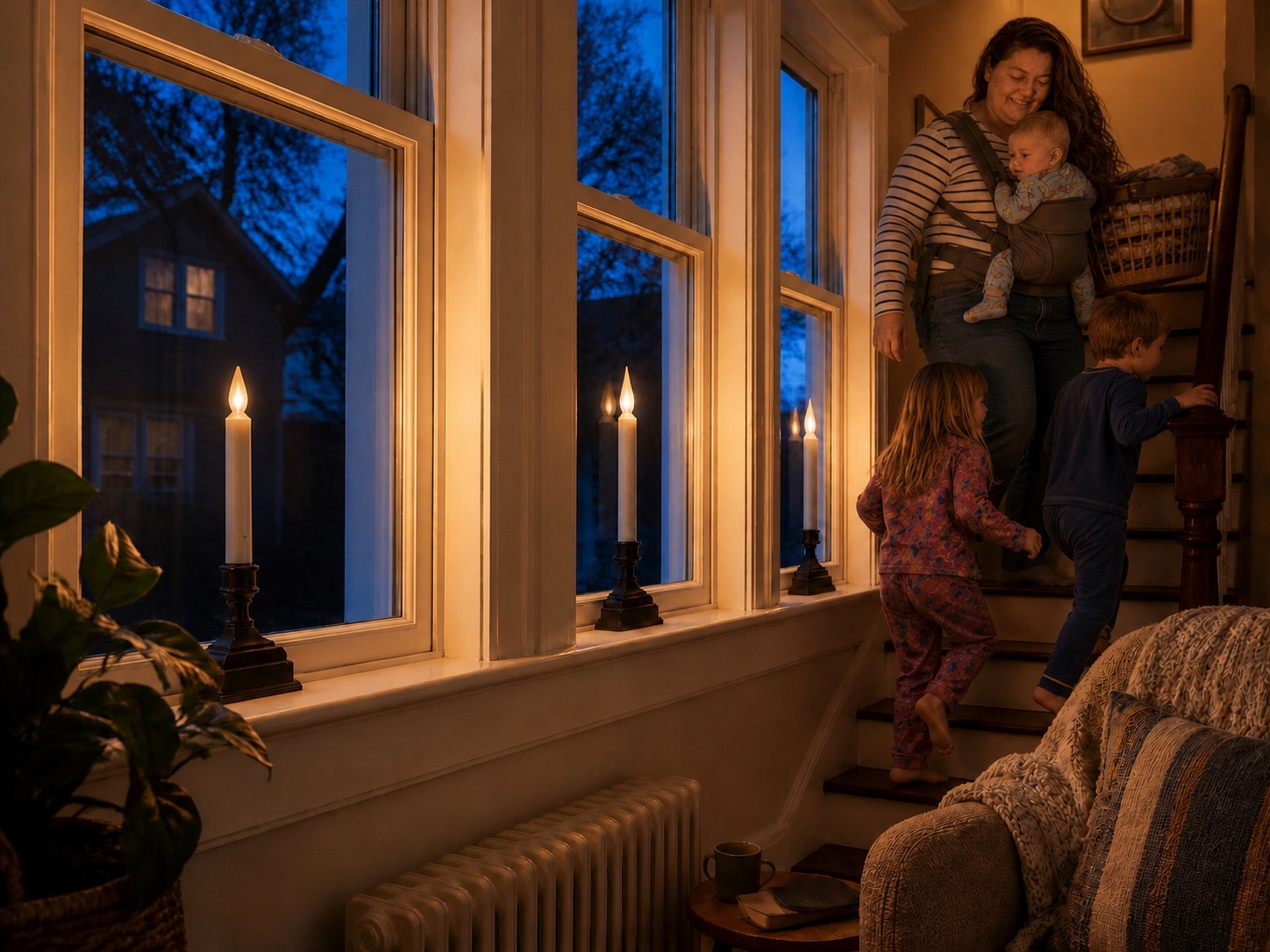
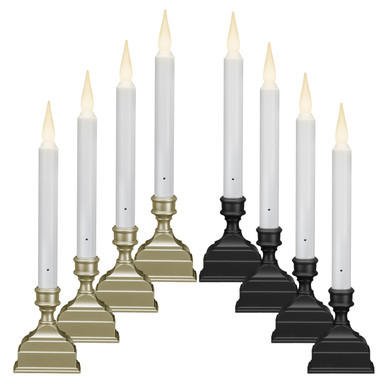
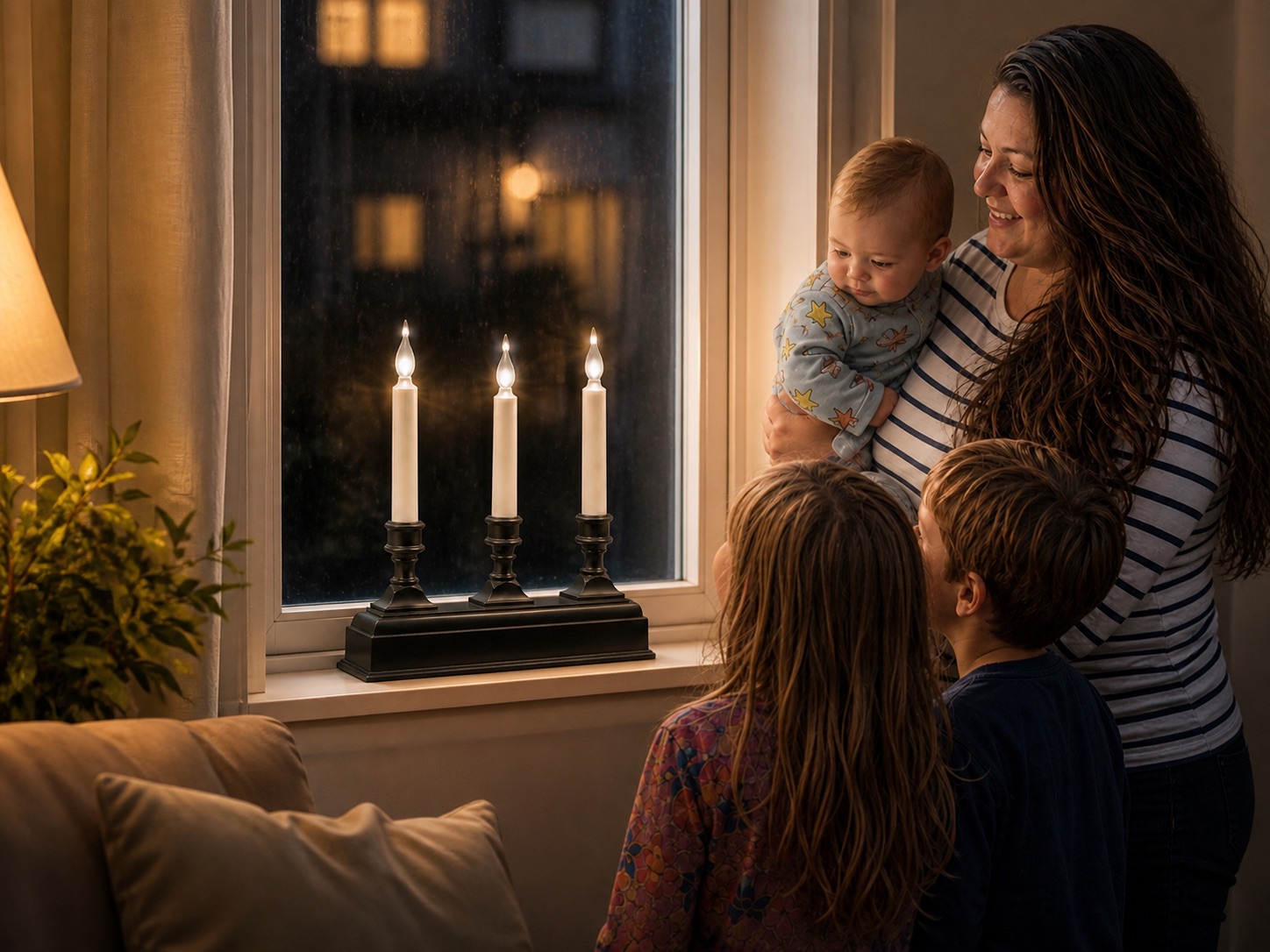
The candle that looks best from the sofa is not always the one that reads best from the street. Decide whether you want the old warm plug-in look, the brightest curb view, automatic dusk timing, or more light in one narrow window.
Test the house from the sidewalk, not the product page
- Choose one representative first-floor window and confirm the base fits with the sash, screen, blinds, and curtains in their normal positions.
- Turn the candle on at the intended start time. A fixed timer repeats from that moment; a sensor model needs the room and window to become dark enough to trigger it.
- Photograph the window from the street at the same exposure you use for an ordinary phone picture. If the candle vanishes, choose the hot-spot version or reduce competing light.
- Only then count windows and batteries. Label the underside by room so every candle returns to the same sill after battery changes.
What not to mix
Warm and pure-white candles can both look good. They rarely look accidental in a good way when they alternate across the same facade.
| If continuity matters | Keep consistent |
|---|---|
| Across one exterior wall | Bulb color and candle height |
| Across a pair of windows | Single candles versus candelabras |
| Across one room | Timer length and activation method |
The whole plan
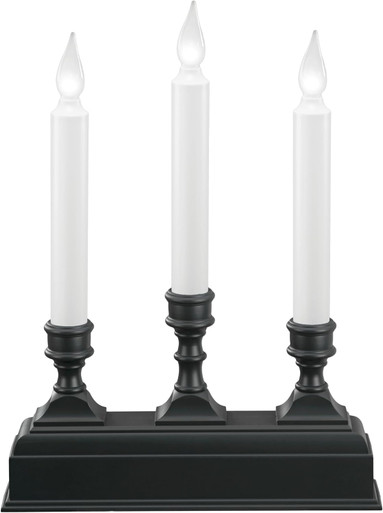
Choose the VT-1806 for the closest match to warm old plug-ins, the VT-1506 when curb visibility matters more than warmth, the VT-1620 when sunset should start the schedule, or the VT-1530 when one window needs a fuller three-light shape.
A small note
Paid links are marked where they appear. As an Amazon Associate I earn from qualifying purchases.